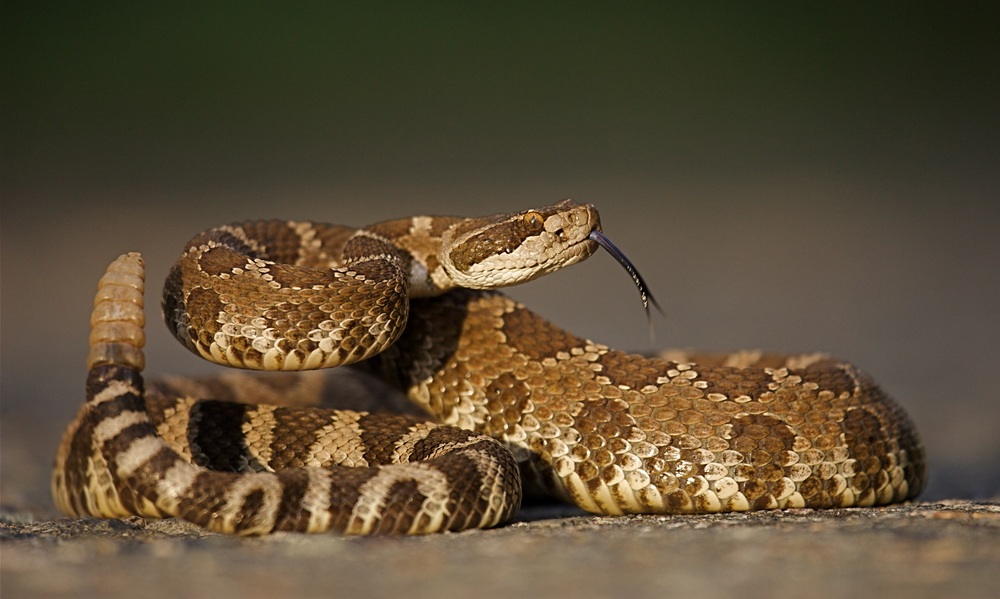
It’s snake bite season!
First, about the snakes. There are 5 species of rattlesnakes in our area. They have good vision to about 15 feet. They tend to bask in the sun near a hiding spot such as a burrow, wood or haystack, or rock crevice for quick escape. They hibernate in winter, and emerge when the weather warms up.
When are rattlesnakes most active?
Springtime is the most active and stressful time for the snake. It is hungry after hibernation, needs to shed its skin, and reproduce. This is the most likely time our pets may come in contact with them, but it can happen very late into Autumn as well.
During hotter weather, rattlesnakes may be inactive during the day, and hunt morning and evening. They can also hunt at night using their ability to detect vibration and body heat from prey species.
How The Venom Affects Your Pet
Contrary to popular opinion, bites of baby rattlesnakes are not consistently worse than those by adult rattlers. The severity of bite depends more on the amount of venom, the characteristics of the venom, the location of the bite, and the size of the animal. There are variations in snake venom not only between species, but between individuals of the same species.